
Separation Anxiety: We all fear it, it’s hard to live with an animal that has it, and it severely restricts our life and activities. There are a lot of myths that have been popularized out in the world, let’s talk about them and how much they should impact your day to day!
Myth 1: If my dog follows me around in my home, they probably have separation anxiety.
There’s a couple things wrong with that statement. The first is that separation anxiety is an umbrella term that we seem to use to cover a wide variety of separation related distress. The most common form we see is actually isolation distress, which means they just don’t want to be alone, but they do not have to be with a specific person. True separation anxiety, which can only be diagnosed by a veterinarian, means your dog not only can’t be left alone, but there is a specific person they need to be around in order to be comfortable.
The other issue with the above statement is that studies have shown that both dogs that experience separation related distress and dogs that do not have any separation related distress both have been seen to follow owners around the home. Which means that’s not necessarily a sign that when truly left alone in the home that the dog will be distressed. Dogs are man’s best friend, after all, it stands to reason that when we’re around they would want to be around us!
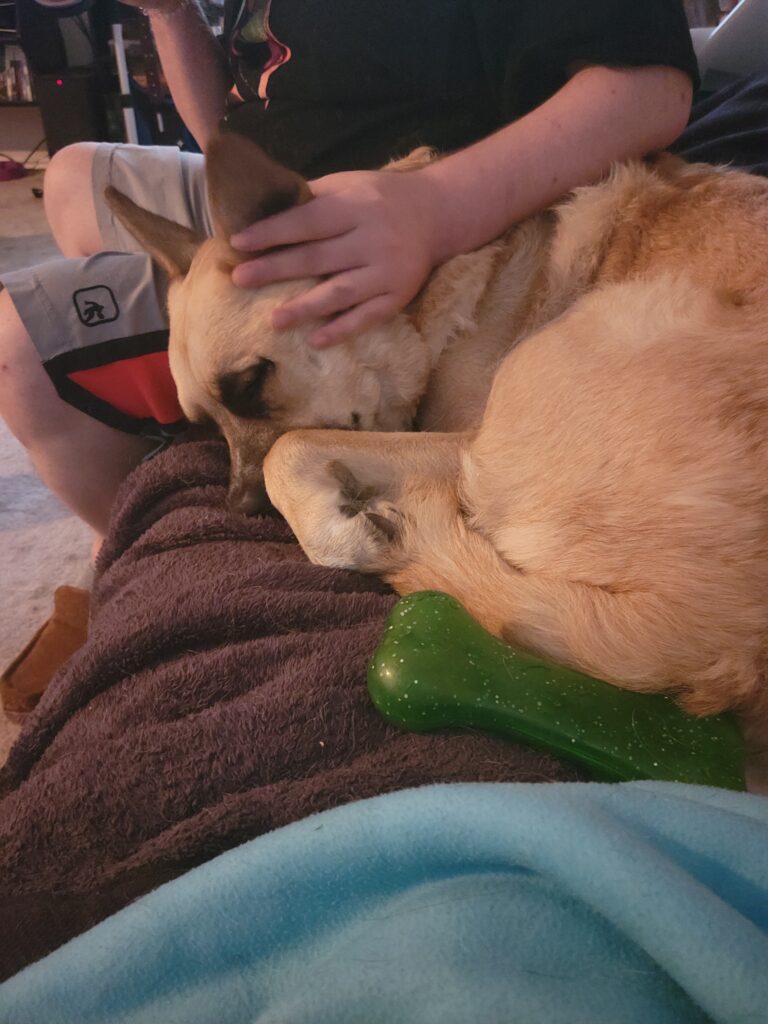
Myth 2: If my dog destroys things when I’m gone, I should crate them while I’m gone.
Crating a dog with separating related distress can actually exacerbate the problem and potentially cause injury to your dog. It is common, if one has one form of anxiety that other forms of anxiety will also be present. Confinement anxiety tends to be prevalent in dogs that suffer from separation related distress. Which means that putting them in a crate is making them even more anxious than just leaving them does. Sure, your walls, carpet, remote control, and shoes might not get destroyed, and that’s a plus! But your dog might try so hard to escape from the crate that they injure themselves, which can be much more costly than replacing some shoes. Of course I’m not advocating for letting your dog have free reign to destroy everything you own, I’m just saying setting them up for major injuries is also not a viable solution.
Myth 3: I should leave an item of clothing or bedding for my dog to cuddle with while I’m gone because it smells like me and will give my dog comfort.
Assuming your dog doesn’t destroy the item you leave for them, it doesn’t really accomplish anything significant. The nose of a dog is sensitive and can pick up smells that humans can’t necessarily perceive. Your scent is all over your home. You don’t have to do anything in particular to leave your scent with your dog when you leave, it already permeates the whole place. So while this isn’t detrimental, I think it comforts us humans to be able to do something more than it comforts a dog who is fully aware that you are not there.
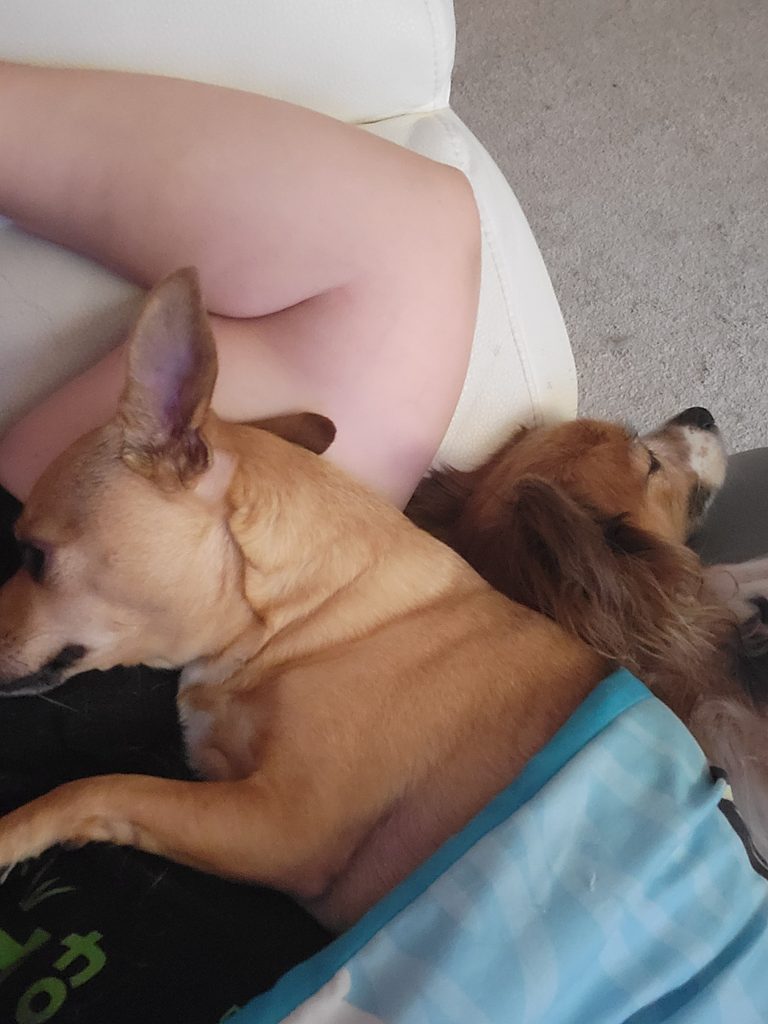
Myth 4: I should leave a food toy for my dog while I’m gone so they can be distracted and maybe not even realize I’m gone.
Again, this does not harm anything, but it also doesn’t really do anything for the dog. They know you’re gone. A treat is not going to distract them from that fact. If you leaving gives them so much anxiety that they panic, they statistically do not have an appetite in that moment, and that food toy is going to sit untouched until you return.
Putting band-aids on a problem is just a temporary measure, and does not actually treat the underlying issue at hand. If you think your dog suffers from some separation related distress, the best thing you can do for them is treat the anxiety, not the symptoms. Talking to your veterinarian is an excellent first step, as there are some medications that can help dampen the anxiety your dog feels, either day to day or short term when you actually leave. Management is essential: in order to help your dog learn to cope with their anxiety, they need to not get into a panic state so they can learn to be calm. Which means you need to find a way to not leave your dog alone for longer than they can handle, and in the beginning that probably means not leaving them alone at all. And working with a professional who specializes in separation related distress so they can design a customized desensitization plan based on your dog’s needs will put you on the path to success and being able to leave your dog alone as needed.
If you think your dog is experiencing some separation related distress, schedule a free pre consult today so that you can talk about it with a certified professional who specializes in separation related distress. Together, you can come up with a plan and start on the path to success and comfort for everyone!